
Stevia extract can support sugar-reduction work in beverages, baked goods, and confectionery, but the grade must be matched to the finished product. Beverages expose sweetness onset and aftertaste; baked goods require a separate plan for sugar bulk and browning; confectionery adds crystallization and texture constraints. Huacheng Bio's H2-Via range gives buyers a starting point for discussing Rebaudioside A and Rebaudioside M options. The proposed grade, assay method, sample lot, and commercial terms should be confirmed for each application.
Our role is to help the buyer frame the technical question clearly. The following method shows what to define before sampling, what to test in the real formula, and which documents to align before a purchase decision.
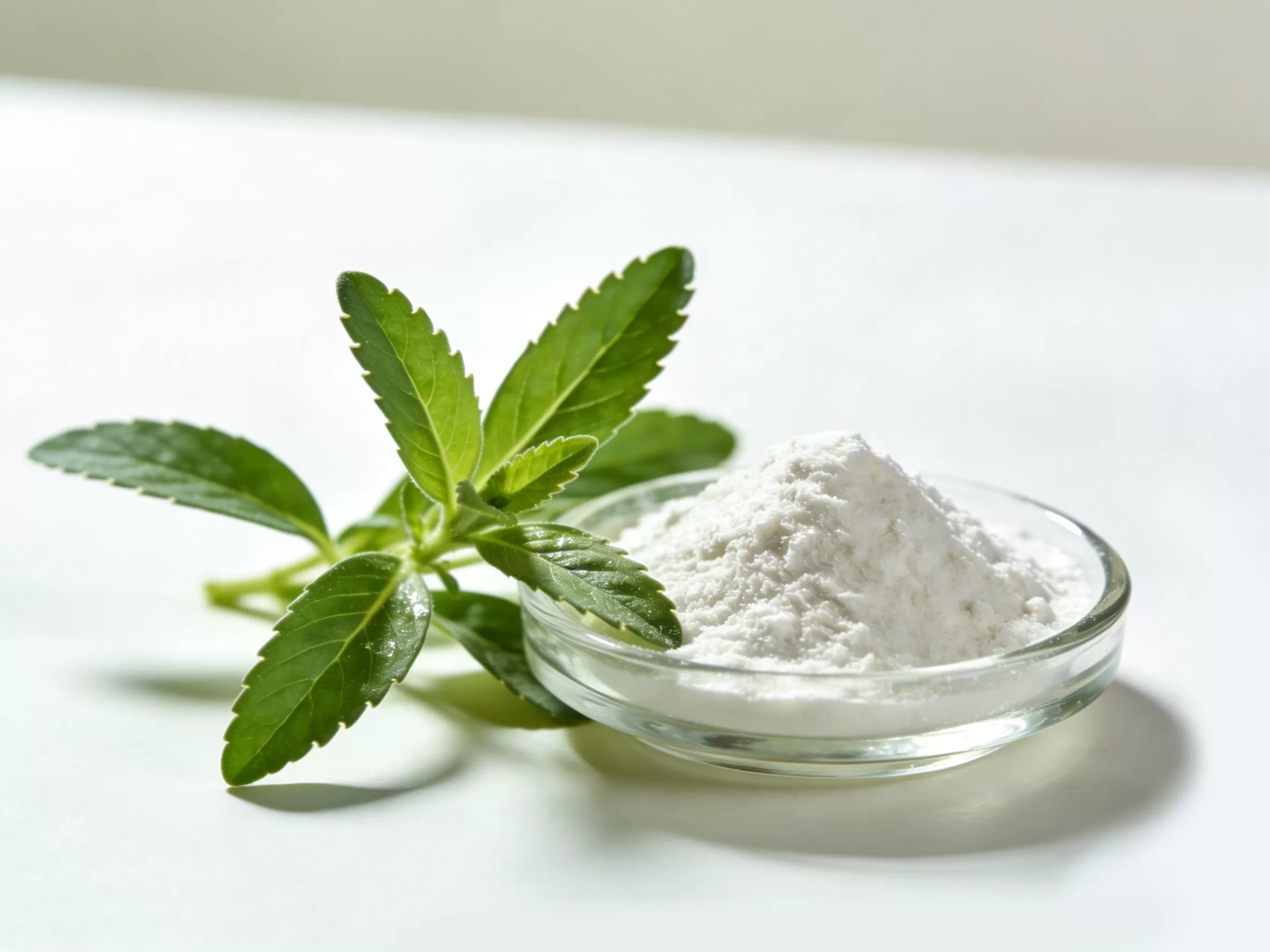
Stevia extract is a family of ingredients. RA grades provide a broad range of purity and cost options, while RM 95% offers a different sweetness curve that may suit a tighter sensory brief. Neither is universally superior. Acids, flavors, protein, minerals, cocoa, and active ingredients can change onset, bitterness, and finish.
Specify RA or RM, target assay, HPLC method, and tolerance in the RFQ. Ask for two technically relevant samples when the choice is uncertain. Compare them at equal perceived sweetness and record the approved dose; comparing equal powder weights can produce a misleading conclusion.
For beverage applications, provide pH, Brix or solids target, flavor type, carbonation, heat treatment, packaging, serving size, and shelf life. A citrus drink may expose lingering sweetness, while coffee or botanical actives may require more bitterness management. A clear drink also places greater emphasis on appearance and dissolution.
Test a full-sugar control, the current reduced-sugar benchmark, and several stevia doses. Evaluate sweetness onset, peak, acidity balance, aroma release, bitterness, finish, clarity, and color immediately after processing and during storage. A water test is useful for screening but cannot approve the commercial beverage.
In baked goods, stevia replaces sweetness but not sucrose mass, water binding, aeration, spread, browning, or tenderness. Partial replacement may preserve more of these functions. Full replacement requires a deliberate bulking and texture system chosen for the label and destination market.
Keep sweetness and structure trials distinct. First set the stevia dose against a sensory benchmark; then adjust fiber, polyol, rare sugar, starch, fat, protein, or hydrocolloid variables as appropriate. Measure piece weight, rise or spread, bake loss, color, moisture, water activity where relevant, texture, and package stability.
For confectionery, define whether the product is hard candy, gummy, lozenge, chocolate, chew, or filling. Each format has a different solids, water, temperature, crystallization, and flavor-release profile. A low stevia dose does not replace the carbohydrate structure that forms the product.
Evaluate sweetness alongside chew or snap, cooling effect, stickiness, crystallization, color, and active-ingredient bitterness. Confirm when the extract is added and whether the process exposes it to extended heat. Pilot equipment can reveal distribution and dosing problems that a small bench batch hides.
HuachengBio's H2-Via is a fine powder made from Stevia rebaudiana leaves and provides Rebaudioside A and Rebaudioside M grade options. Use the current signed specification and lot COA for approval because the exact ordered grade and your customer requirements must be aligned.
Request the TDS, SDS, ingredient statement, allergen statement, origin, storage, shelf life, packaging, and certificates required by the destination market. The HuachengBio quality page lists laboratory equipment and certification information; verify certificate holder, site, scope, validity, and coverage before filing it.
Record product name, grade, assay, sample lot, dose, formula version, process, and sensory result. Ask whether the sample is from routine production and whether the commercial order will use the same site, method, and specification. Retain the approved sample and compare the first production lot in the finished product.
Confirm MOQ, lead time, pack size, remaining shelf life, Incoterm, annual forecast, and change-notification process. These commercial points must be quoted rather than assumed. They determine whether a technically successful grade can support launch and repeat orders.
Calculate cost per finished serving or per metric ton at the sensory-approved dose. Add freight, incoming tests, premix preparation, handling loss, bulking ingredients, and flavor correction. A higher-purity grade may cost more per kilogram but use less material or reduce masking work.
Use the same product base, serving size, sweetness target, and acceptance criteria for every supplier sample. This gives procurement a fair comparison and prevents an inexpensive but poorly matched grade from creating extra development rounds.
State the product category, serving size, sugar benchmark, reduction target, pH, heat process, flavor system, label goal, market, sample quantity, first order, annual forecast, and document list. Ask the manufacturer to recommend RA, RM, or both and explain the proposed starting dose.
A useful reply identifies the exact grade, assay, tolerance, sample lot, specification, availability, packaging, MOQ, lead time, shelf life, Incoterm, and change-control terms. That response can be reviewed by R&D, QA, and procurement without translating a generic sales quote.
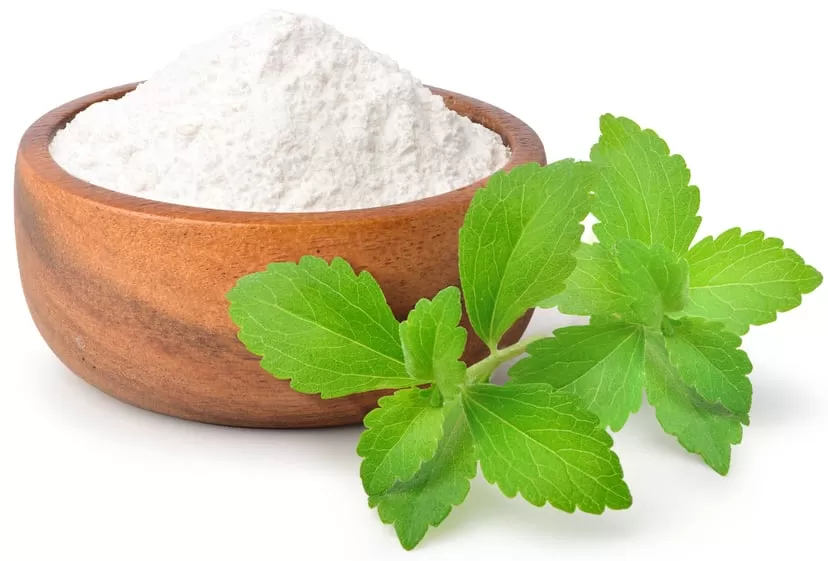
Create one common base and compare the grades at equal perceived sweetness. Use coded samples and a defined score sheet covering onset, peak, bitterness, licorice-like character, flavor release, body, and finish duration. A ranking based only on immediate sweetness misses the aftertaste that can determine consumer acceptance.
Evaluate at the intended serving temperature and after the actual heat process. For shelf-stable products, repeat the test at planned storage intervals. Keep a full-sugar control and the current reduced-sugar version in every session so panel drift does not turn a small difference between extracts into an exaggerated conclusion.
Record exact weights, dilution steps, premix carrier, mixing time, and sample lot. At high purity, a small dosing error can look like a sensory defect. If the bench cannot meter the commercial dose reliably, create a controlled concentrate or dry premix and include that method in the pilot instructions.
Write the purchase specification around the exact glycoside identity, assay method, tolerance, appearance, particle size, moisture where required, microbiological limits, contaminants, packaging, and storage. Separate tests reported on every COA from periodic verification and customer-specific testing.
Retain the approved sample and the first commercial lot. Compare future lots for assay, appearance, dispersion, and the sensory attributes that protect the formula. A chemical pass does not by itself resolve a material change in sweetness timing or finish; define an investigation and requalification route before purchasing.
Ask the manufacturer to notify changes to raw-material source, extraction or purification process, assay method, production site, specification, packaging, or shelf life. Set the notice period and approval requirement in the supply agreement. This protects the validated formula and prevents an unplanned reformulation after launch.
Compare quotations at the sensory-approved dose, then add freight, duty, testing, premix preparation, handling loss, bulking ingredients, masking flavors, and development time. Report cost per thousand servings or per metric ton of finished product. This gives RA, RM, and GSG options a common commercial basis.
Confirm MOQ and lead time separately for every grade. A portfolio range does not prove that each specification is routinely stocked or produced on the same schedule. Ask whether the sample lot can be supplied commercially, how long a quotation or reservation is valid, and what remaining shelf life will be available on arrival.
Provide first-order quantity, annual forecast, destination, required Incoterm, and planned launch date. Ask which event starts lead time: sample approval, purchase order, deposit, or production confirmation. The answer helps procurement build a realistic schedule and identifies where a technically preferred grade may carry supply risk.
R&D should approve the grade, sample lot, dose, formula, process, and sensory benchmark. QA should approve the specification, method, COA, certificates, storage, packaging, and traceability. Procurement should approve MOQ, price, pack size, lead time, Incoterm, forecast, and change-notification terms.
Place the manufacturer product code and complete glycoside designation on every internal record. Avoid abbreviating a material to “stevia” once several RA, RM, or GSG grades enter the project. The receiving team should be able to match the purchase order, pack label, COA, and approved specification without interpretation.
Before launch, conduct a pilot using commercial equipment and a representative lot. Confirm dosing accuracy, premix uniformity, dissolution, yield, and finished-product sensory performance. Keep a retained lot and define who can authorize a future grade or site change. This closes the path from attractive laboratory sample to repeatable manufacturing ingredient.
Share your beverage, bakery, or confectionery matrix, sugar-reduction target, process conditions, market, and document needs. HuachengBio can use that information to confirm which H2-Via grade details, sample documents, and quotation inputs need review.
Contact HuachengBio for stevia samplesRequest the current specification, representative or lot COA, assay method, TDS, SDS, allergen and origin statements, packaging, storage, shelf life, certificates, MOQ, lead time, and change-control terms.
Test it in the finished product at the target serving size and actual process conditions. Record dose, sensory result, appearance, stability, and the exact lot identity.
No single grade should be assumed to work identically. The application matrix, process, sugar functions, sensory target, and cost-in-use determine the best option.







 EN
EN EN
EN CN
CN ES
ES PT
PT SV
SV DE
DE TR
TR FR
FR AR
AR BG
BG HR
HR CS
CS DA
DA NL
NL FI
FI EL
EL HI
HI IT
IT JA
JA KO
KO NO
NO PL
PL RO
RO RU
RU CA
CA TL
TL IW
IW ID
ID LV
LV LT
LT SR
SR SK
SK SL
SL UK
UK VI
VI SQ
SQ ET
ET GL
GL HU
HU MT
MT TH
TH FA
FA AF
AF MS
MS GA
GA BE
BE UZ
UZ